

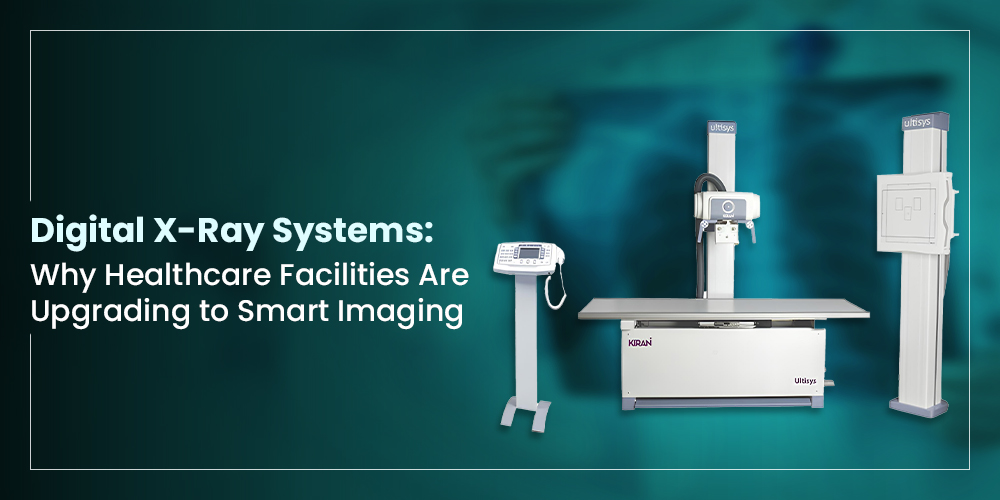
Digital X-Ray Systems: Benefits for Modern Healthcare
17 Jul 2026
Medical imaging has always been central to accurate diagnosis. From identifying fractures to evaluating chest conditions and monitoring chronic diseases, X-ray imaging remains one of the most frequently performed diagnostic procedures across healthcare facilities. However, as patient volumes increase and expectations for faster, more accurate care continue to grow, conventional imaging systems are gradually giving way to digital radiography.
Today, investing in a digital X-ray machine is no longer just a technology upgrade. It is a strategic decision that helps hospitals improve workflow efficiency, diagnostic confidence, and patient care. As healthcare providers embrace smarter imaging, the digital radiography system has become an essential part of modern medical X-ray equipment.
The Shift Towards Digital Radiography
Traditional film-based and Computed Radiography (CR) systems have served healthcare providers for decades. While effective, they often involve multiple manual steps, longer processing times, and greater operational costs.
A modern digital radiography system captures high-quality images almost instantly, allowing clinicians to review scans within seconds. This reduces waiting times, supports quicker reporting, and enables faster treatment decisions.
As hospitals, diagnostic centres, and speciality clinics continue to modernise, digital imaging has become the preferred choice for delivering efficient and patient-centred care.
Why Hospitals Are Upgrading to Digital X-Ray
One of the biggest trends in healthcare today is the growing adoption of digital X-ray machines. But why hospitals are upgrading to digital X-ray is about much more than replacing older equipment.
Healthcare facilities are investing in digital systems to:
- Improve diagnostic accuracy
- Increase patient throughput
- Reduce examination time
- Optimise workflow efficiency
- Enhance patient safety
- Improve collaboration across departments
With increasing patient demand and pressure to deliver high-quality care, digital imaging helps hospitals meet both clinical and operational goals.
Benefits of Digital X-Ray Systems
The benefits of digital X-ray systems extend far beyond faster image acquisition. They improve nearly every aspect of the diagnostic imaging process.
Faster Diagnosis
Time plays a critical role in healthcare. A digital X-ray machine produces high-resolution images almost immediately after exposure.
This enables radiologists and clinicians to review findings quickly, supporting faster diagnoses and reducing delays in treatment.
In emergency departments, this speed can have a direct impact on patient outcomes.
Superior Image Quality
Modern digital radiography systems deliver exceptional image clarity with advanced detector technology.
Clinicians can visualise subtle anatomical details more clearly while adjusting brightness, contrast, and magnification without repeating examinations.
This enhances diagnostic confidence while reducing unnecessary repeat exposures.
Improved Workflow Efficiency
One of the biggest benefits of digital X-ray systems is improved workflow.
Digital imaging simplifies the radiology process by eliminating film development and manual handling.
Healthcare facilities benefit from:
- Faster image acquisition
- Immediate image availability
- Reduced patient waiting times
- Efficient reporting
- Simplified image sharing
These improvements help radiology departments examine more patients without compromising quality.
Lower Radiation Exposure
Modern medical X-ray equipment is designed to optimise radiation dose while maintaining excellent image quality.
Advanced detector technology enables healthcare providers to obtain diagnostic images using lower radiation levels, improving patient safety and supporting best imaging practices.
Better Patient Experience
Patients today expect faster and more convenient healthcare experiences.
Digital X-ray systems reduce examination times, minimise repeat imaging, and improve overall comfort, particularly for elderly patients and those with limited mobility.
Digital X-Ray vs Traditional X-Ray
When comparing digital X-ray vs traditional X-ray, the advantages of digital technology become clear.
Traditional systems require film processing, chemical development, physical storage, and longer reporting times.
Digital X-ray systems offer:
- Instant image acquisition
- Higher image quality
- Easier image enhancement
- Reduced operational costs
- Faster diagnosis
- Seamless digital storage
- Quick image sharing
- Improved workflow efficiency
These advantages have made digital imaging the preferred choice for modern healthcare facilities.
Supporting Multiple Clinical Applications
A digital radiography system supports a wide variety of examinations across multiple specialties.
Common applications include:
- Chest Imaging
- Orthopaedics
- Trauma Care
- Spine Imaging
- Abdomen Studies
- Paediatric Radiography
- Emergency Medicine
- Outpatient Diagnostics
Its versatility makes it an important component of today's medical X-ray equipment portfolio.
Smart Imaging for Modern Healthcare
Modern digital radiography goes far beyond capturing images.
Today's systems incorporate intelligent technologies such as:
- Smart detector technology
- Automated positioning assistance
- Image stitching
- Advanced exposure control
- Workflow automation
- User-friendly touchscreen interfaces
These innovations help improve consistency, reduce operator workload, and support greater diagnostic confidence.
Preparing for the Future
Healthcare is increasingly embracing digital transformation.
Artificial intelligence, cloud connectivity, and workflow automation are shaping the future of diagnostic imaging.
Healthcare facilities investing in digital X-ray machines today are better prepared to integrate future innovations while continuing to deliver efficient, patient-centred care.
Choosing the Right Digital X-Ray Machine
When selecting a digital X-ray machine, healthcare providers should consider:
- Image quality
- Detector technology
- Generator performance
- Clinical applications
- Workflow integration
- Ease of operation
- Upgrade flexibility
- After-sales service and support
Choosing the right solution ensures long-term clinical value while supporting future growth.
Conclusion
The move towards digital imaging is transforming healthcare delivery. Whether improving workflow efficiency, enhancing diagnostic accuracy, or supporting better patient experiences, the benefits of digital X-ray systems are helping healthcare providers deliver smarter care every day.
As more facilities recognise why hospitals are upgrading to digital X-ray, investing in advanced digital radiography systems has become essential for meeting the demands of modern healthcare. Compared to digital X-ray vs traditional X-ray, the advantages in speed, image quality, operational efficiency, and patient care make digital imaging the clear choice for the future.
At Trivitron Healthcare, we are committed to supporting healthcare providers with advanced medical X-ray equipment that combines innovative technology, reliable performance, and exceptional diagnostic confidence.