

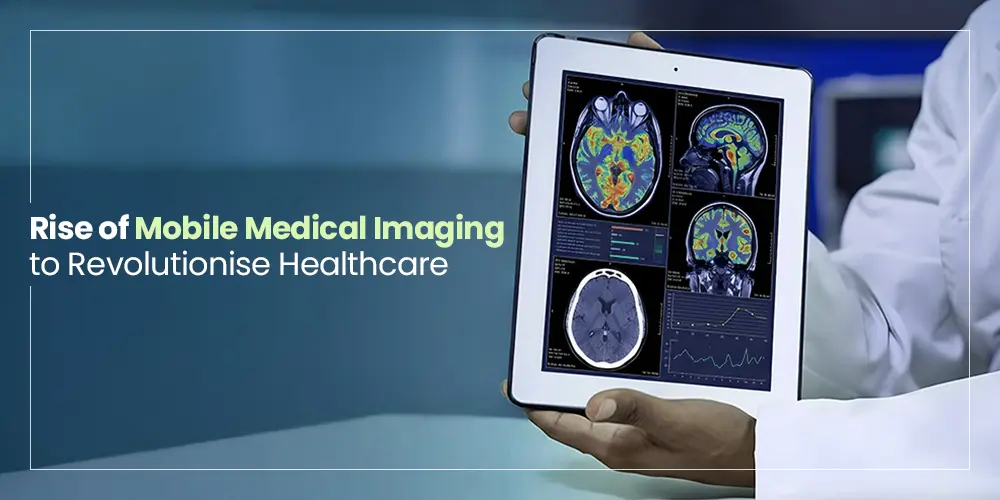
Rise of mobile medical imaging to revolutionise healthcare
10 Apr 2026
Mobile medical imaging is shifting diagnostics from fixed rooms to the patient’s side, making care faster, safer, and more accessible across hospitals, ambulances, and even homes. For a solutions-driven brand, this rise of mobile imaging technology in healthcare is an opportunity to close gaps in access while elevating diagnostic quality for every patient.
Why Mobile Imaging Matters Now
Mobile medical imaging brings X-ray, ultrasound, and other modalities directly to the bedside instead of asking vulnerable patients to travel to the radiology department. This reduces delays in diagnosis, minimises transport-related risks for critically ill patients, and improves comfort for those in ICUs, emergency units, and nursing homes.
The pandemic further accelerated adoption, as clinicians needed fast, on-site imaging to triage respiratory cases while limiting crowding and infection risk in central imaging suites. Today, mobile systems are increasingly seen as core infrastructure for resilient, patient-centric care rather than “nice-to-have” add-ons.
Key Technologies Powering the Shift
Modern mobile imaging carts and compact systems now support digital imaging in healthcare across multiple modalities, from handheld ultrasound to lightweight mobile X-ray systems. Miniaturisation, battery advances, and wireless connectivity allow devices to move seamlessly between ICUs, operating rooms, outpatient clinics, and ambulances.
Integrating imaging hardware with cloud PACS, tele-radiology, and AI-enabled workflow tools can turn each mobile unit into a connected diagnostic node rather than a standalone device. This ecosystem approach ensures images captured at the bedside are instantly available to specialists anywhere, supporting rapid, informed decisions.
Portable Ultrasound Devices at the Point of Care
Portable ultrasound devices, especially handheld and point-of-care ultrasound (POCUS) systems, are among the fastest-growing mobile imaging tools worldwide. They fit in a pocket or small bag, offer real-time imaging at the bedside, and support rapid assessment for trauma, heart failure, lung disease, obstetrics, and procedural guidance.
Clinicians can now perform focused scans in emergency rooms, ICUs, rural clinics, and even community camps without waiting for a traditional cart-based machine. This immediacy improves triage, reduces unnecessary transfers, and often speeds up life-saving interventions, a clear example of how mobile imaging technology in healthcare improves outcomes.
Mobile X-Ray Systems Redefining Access
Mobile X-ray systems bring chest, skeletal, and other radiographic exams directly to patients who are too unstable, infectious, or immobile to visit a fixed X-ray room. In ICUs, nursing homes, and emergency settings, bedside X-ray minimises transport risks, shortens time-to-diagnosis, and reduces staff workload associated with moving critically ill patients.
Digital mobile X-ray units also provide quick image review, lower radiation doses, and easy sharing of images with remote specialists for consultation. Mobile X-ray can help facilities deliver high-quality diagnostics even in space-constrained or resource-limited environments.
How Digital Imaging in Healthcare Enhances Mobile Platforms
Digital imaging in healthcare is the backbone that makes mobility truly powerful, enabling images to be captured, stored, and shared instantly without film or cassette processing. Advanced image processing and noise reduction algorithms provide sharp, high-quality images even from compact, portable systems.
Cloud-based archiving, teleradiology, and AI-assisted analysis allow radiologists and clinicians to access mobile imaging studies from any connected device. For health systems, this means mobile units can plug directly into enterprise workflows, quality programs, and analytics dashboards rather than operating in isolation.
Benefits for Patients, Clinicians, and Systems
Mobile imaging offers a spectrum of benefits across stakeholders.
- EHR systemsPatients gain faster access to diagnostics, fewer transfers, reduced discomfort, and better continuity of care, especially in remote or underserved areas.
- Clinicians benefit from real-time data at the bedside, improved triage, and greater flexibility in managing emergencies and fragile patients.
- Health systems see improved throughput, lower infrastructure costs compared to fully built-out fixed suites, and better utilisation of radiology expertise through tele-reporting.
- AI-assisted image analysis
Combining robust mobile hardware with training, service, and workflow integration helps providers unlock these benefits at scale rather than through isolated pilots.