

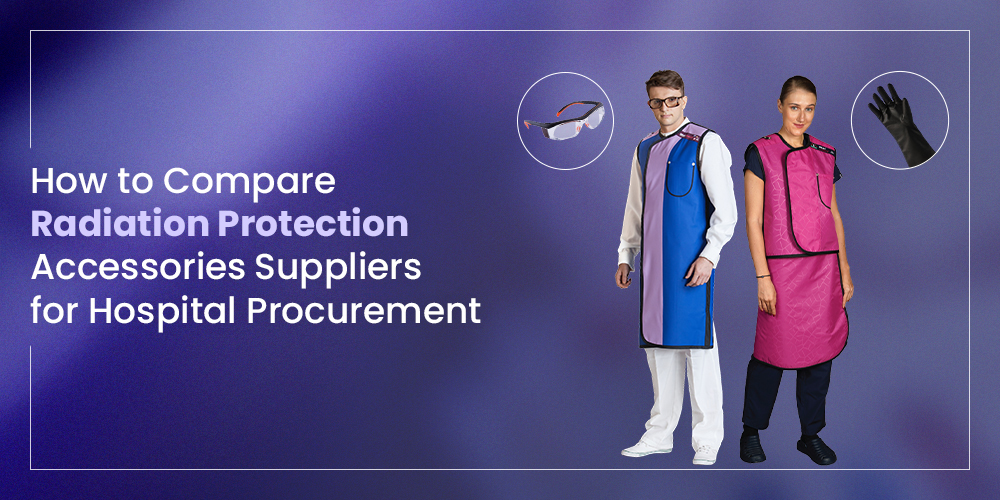
How to Compare Radiation Protection Accessories Suppliers for Hospital Procurement
19 Nov 2026
Radiation safety is a shared responsibility across radiology departments, cath labs, operating theatres and other imaging environments. Choosing suitable protective accessories helps hospitals support safe working practices for clinicians and patients.
Procurement involves more than comparing quotations. Product specifications, fit, durability, documentation and supplier support all matter. When evaluating Radiation Protection Accessories Suppliers, hospitals should use a consistent checklist to compare products against clinical requirements.
1. Start with Department Requirements
Before selecting accessories, identify the intended users and areas of application:
- Department: Identify whether the equipment will be used in diagnostic X-ray rooms, cath labs, interventional suites or other imaging environments.
- Intended users: Determine which healthcare professionals require protective accessories.
- Product requirements: List the accessories needed, such as protective aprons, thyroid shields, eyewear, gloves, patient shields, arm and leg guards, or radiation protection curtains.
- Clinical guidance: Consult the hospital's radiation protection officer or medical physicist to determine requirements based on procedures and exposure risks.
2. Compare Specifications, Not Just Product Names
Products that appear similar may differ in protective material, lead equivalence, coverage, design and intended application. When comparing options, consider the following:
- Product specifications: Request detailed specifications from suppliers and compare equivalent products side by side.
- Lead equivalence: Verify the stated lead equivalence of garments and shields and ensure it is suitable for the intended procedure.
- Fit and coverage: Check available sizes, coverage, closure designs and compatibility with other protective apparel.
- Usability: Assess the fit and coverage of protective eyewear. For curtains and shields, check whether the dimensions and mounting arrangements suit the clinical environment.
- Clinical suitability: Select Radiation Protection Accessories For Hospitals based on intended use and professional guidance rather than assuming one specification suits every department.
3. Assess Comfort, Fit and Usability
Protective equipment must be practical for the people using it. Heavy or poorly fitting garments can become uncomfortable during lengthy procedures, while unsuitable closures or limited sizing can affect usability.
Ask about material options, garment design, weight, adjustability and available sizes. Where possible, involve staff in evaluating fit and movement. Consider how easily accessories can be put on, cleaned and stored.
Trivitron’s radiation protection portfolio includes products from Kiran Medical Systems, such as protective aprons, thyroid shields, eyewear, gloves and other accessories, with different material and design options.
4. Check Documentation and Inspection Guidance
Request product datasheets, applicable test or conformity documentation, warranty terms, and instructions for use and care. Confirm that the specifications in the quotation match the supplied documents.
The Atomic Energy Regulatory Board (AERB) advises using appropriate protective devices and periodically verifying their shielding adequacy. Ask how protective garments should be inspected, cleaned and stored, and what criteria should prompt further assessment or replacement. Garments can deteriorate with use, so hospitals should establish an inspection process rather than rely on appearance alone. Trivitron’s guidance on protective garment care highlights cleaning, correct storage, regular checks and designated responsibility for radiation protection.
Resolve any documentation gaps before placing an order.
5. Compare Durability and Total Cost
The lowest quotation may not offer the best long-term value. Consider expected usage, material durability, warranty coverage, replacement options and suitable storage systems.
Protective aprons need appropriate storage to help maintain their condition. Trivitron’s accessories portfolio includes storage systems designed to help maintain apron shape and support organised storage.
When comparing Radiation Protection Equipment Suppliers In India, request itemised quotations covering specifications, quantities, delivery, warranty and additional charges. This makes like-for-like comparisons easier and helps with future replacement planning.
6. Evaluate Supplier Support and Product Range
A supplier’s role should not end at delivery. Ask about product availability, delivery timelines, technical assistance, care guidance and how warranty claims are handled.
Hospitals comparing X-Ray Protection Accessories Suppliers should confirm that the proposed products suit their specific applications. Trivitron’s range includes aprons, shields, gloves, eyewear, arm guards, leg guards, patient aprons, CT shields and curtains. Reviewing the portfolio can help procurement teams identify relevant options for assessment.
7. Use a Consistent Procurement Checklist
Compare each supplier against the same criteria:
- Suitability for the intended procedure and department.
- Shielding specifications and product documentation.
- Fit, comfort, sizing and ease of use.
- Cleaning, storage and inspection guidance.
- Warranty, delivery and after-sales support.
- Total cost and quotation clarity.
A structured approach to Hospital Radiation Protection Equipment Procurement helps teams balance safety requirements, usability and budget. Involving clinical users and radiation safety specialists early supports a more informed decision.
Explore Trivitron Healthcare’s radiation protection portfolio to review available products and discuss your facility’s requirements: https://www.trivitron.com/products/radiation-protection
Frequently Asked Questions
1. What should hospitals compare when selecting radiation protection suppliers?
Compare product specifications, clinical suitability, documentation, comfort, durability, warranty, delivery and after-sales support.
2. Which radiation protection accessories may hospitals need?
Depending on procedures, facilities may require aprons, thyroid shields, protective eyewear and gloves, patient shields, arm or leg guards, and radiation protection curtains. Consult the hospital’s radiation safety specialist to determine requirements.
3. Why is lead equivalence important?
Lead equivalence indicates a product’s shielding capability under specified test conditions. The appropriate level depends on intended use and should be determined with qualified radiation protection guidance.
4. Why consider more than the purchase price?
Cleaning, storage, inspection, durability, replacement and service support affect long-term value. Reviewing these factors helps teams assess overall cost, not just the initial quotation.