


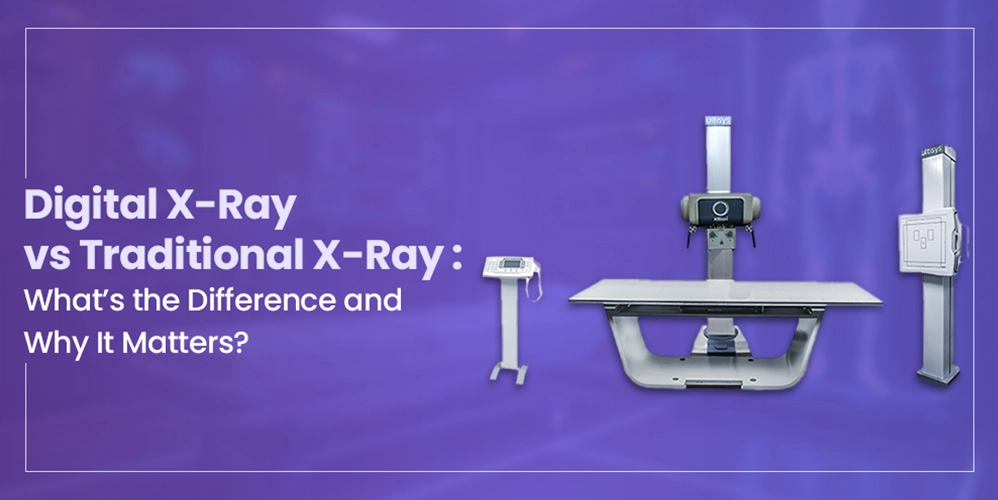
X-ray imaging is one of the most widely used diagnostic tools in the healthcare world. X-ray equipment plays a vital role in diagnosing chest infections, assessing fractures, and supporting surgical procedures. Over the years, however, there has been a major shift from traditional X-ray (film-based) to advanced digital X-ray systems, transforming the way hospitals capture, store, and interpret diagnostic images.
For clinics, diagnostic centres, and hospitals planning upgrades, understanding the difference between digital and traditional imaging is crucial. Let’s explore how both systems work, why digital radiography is rapidly becoming the preferred choice, and what it means for patient care and operational efficiency.
What Is a Traditional X-Ray?
A traditional X-ray, also known as a film-based X-ray, uses physical films and chemical processing to create diagnostic images.
How It Works
- X-ray beams pass through the patient.
- The beams hit a photographic film.
- The film is chemically processed in a darkroom to create a visible image.
Characteristics of Traditional X-Ray
- Requires films, developer, and fixer
- Images take several minutes to process
- Needs a dedicated darkroom
- Higher running and maintenance costs
- Lower consistency in image quality
Although traditional systems have served healthcare for decades, they are slower, less efficient, and more resource-intensive compared to modern imaging methods.
What Is a Digital X-Ray?
Digital X-ray systems, also known as digital radiography (DR), replace physical film with digital detectors. These detectors capture X-ray data and convert it into high-resolution images instantly.
Characteristics of Digital X-Ray Systems
- Instant image viewing
- Adjustable brightness, contrast, and zoom
- Integration with PACS and electronic medical records
- Low radiation dose
- Zero chemical waste
- Ideal for high-volume imaging environments
Now, digital X-ray machines are the standard in modern hospitals due to their speed, efficiency, and superior image quality.
Digital X-Ray vs. Traditional X-Ray: Key Differences
1. Image Quality & Diagnostic Accuracy
Traditional X-Ray
- Dependent on correct film exposure
- Variability due to chemical processing
- Higher chances of overexposed/underexposed films
- Frequent retakes = higher radiation dose
Digital X-Ray
- High-resolution images
- Enhanced contrast and detail
- Ability to zoom for micro-fractures or subtle findings
- Consistent results across patients and technicians
Digital radiography allows radiologists to detect abnormalities earlier and more accurately.
2. Speed & Workflow Efficiency
Traditional X-Ray
- Time-consuming chemical processing
- Delays in emergency care
- Slower patient turnover
Digital X-Ray
- Images ready within seconds
- Ideal for trauma care, ICU, and emergency departments
- Faster reporting and reduced waiting time
For high-volume centres, digital X-ray systems offer unmatched speed.
3. Radiation Dose Safety
Traditional X-ray
Requires a comparatively higher radiation dose for proper film exposure.
Digital X-ray
Digital detectors are more sensitive, enabling:
- Lower radiation dose
- Fewer repeat exposures
- Safer imaging for children and frequent-screening patients
Combined with Radiation Protection Aprons and other radiation protection products, digital radiography significantly enhances staff and patient safety.
4. Operational Costs
Traditional X-Ray Costs
- Repeated purchase of films
- Chemical processing expenses
- Darkroom costs
- Film storage space
Digital X-Ray Costs
- Higher initial investment
- Very low operational cost
- No films, no chemicals
- Reduced storage requirements
Over time, digital X-ray machines have proven cost-effective for almost all healthcare facilities.
5. Environmental Impact
Traditional X-ray
Chemical waste (developer/fixer) needs safe disposal to avoid environmental contamination.
Digital X-ray
- No chemical waste
- Reduced physical storage needs
- More sustainable medical imaging option
6. Storage & Accessibility of Images
Traditional
- Films can fade, tear, or get misplaced
- Requires physical storage rooms
- Slow sharing between departments
Digital
- Stored digitally in PACS
- Easy retrieval & sharing
- Supports tele-radiology and remote diagnosis
- Integrates with modern hospital information systems
This makes digital X-ray systems ideal for multi-location healthcare networks.
Why the Shift to Digital X-Ray Matters
1. Faster and More Accurate Diagnoses
High-quality images improve clinical confidence and patient outcomes.
2. Safer Imaging for Patients
Lower radiation exposure reduces long-term risk.
3. Improved Hospital Workflow
Automated processes = smoother operations and faster patient throughput.
4. Supports Modern Healthcare Infrastructure
Works seamlessly with:
- EHR systems
- Telemedicine workflows
- Cloud-based reporting
- AI-assisted image analysis
Digital radiography is engineered for today’s technology-driven healthcare environments.
Should Healthcare Facilities Upgrade to Digital?
While traditional systems still function in small clinics or low-budget setups, the advantages of digital X-ray equipment (speed, clarity, safety, and efficiency) far outweigh initial costs. Most healthcare centres worldwide are upgrading to digital for long-term performance and patient satisfaction.
Conclusion: The Future of Imaging Is Digital
The transition from traditional X-ray to digital X-ray systems marks a crucial step in modernising healthcare. With faster processing, superior image clarity, reduced radiation exposure, and improved workflow, digital radiography enhances both patient care and medical efficiency.
Leading medical technology providers such as Trivitron Healthcare continue to support this transformation with advanced digital X-ray machines, high-quality imaging solutions, and essential radiation protection products that ensure safe, accurate, and reliable diagnostics in every clinical environment.
By adopting digital X-ray systems, healthcare facilities can deliver better care, increase diagnostic confidence, and stay prepared for the future of medical imaging.