


Be Bold, Be Informed: Understanding the Importance of Newborn Screening
EkSahiShuruat
11 Jan 2024
Newborn Screening Test, is a crucial procedure conducted shortly after the birth of a baby. This preventative health measure aims to identify presymptomatic infants who could develop significant metabolic or endocrine disorders if left undiagnosed and untreated.
What is Newborn Screening and Why is it Important?
Newborn screening plays a role, in practice, by aiming to diagnose potential health conditions at an early stage. The main objective is to minimise or prevent lasting consequences through sensitivity of the tests. The purpose of screening is to act as a safety measure identifying health concerns as early as possible which enables timely intervention and proper management. The significance of screening lies in its ability to identify conditions that may not be apparent at birth but could lead to health problems later in life.Common Conditions Detected by Newborn Screening
Newborn screening can detect a variety of conditions. These are primarily metabolic disorders in newborns, endocrine disorders, and other common newborn diseases like:- Hypothyroidism
- Cystic fibrosis
- Sickle cell disease
- Medium-chain acyl-CoA dehydrogenase deficiency (MCAD)
- Biotinidase deficiency
The Newborn Screening Test Procedure
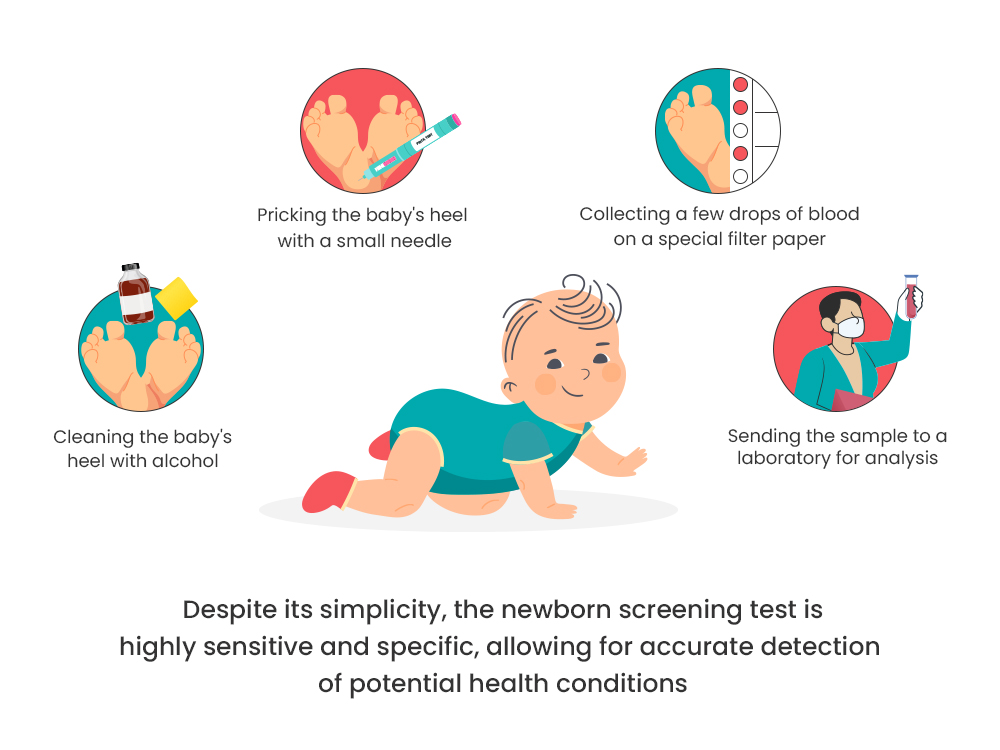
Newborn screening is typically performed within the first 24 to 48 hours after birth. The newborn screening test procedure involves a simple heel prick to collect a small blood sample.