


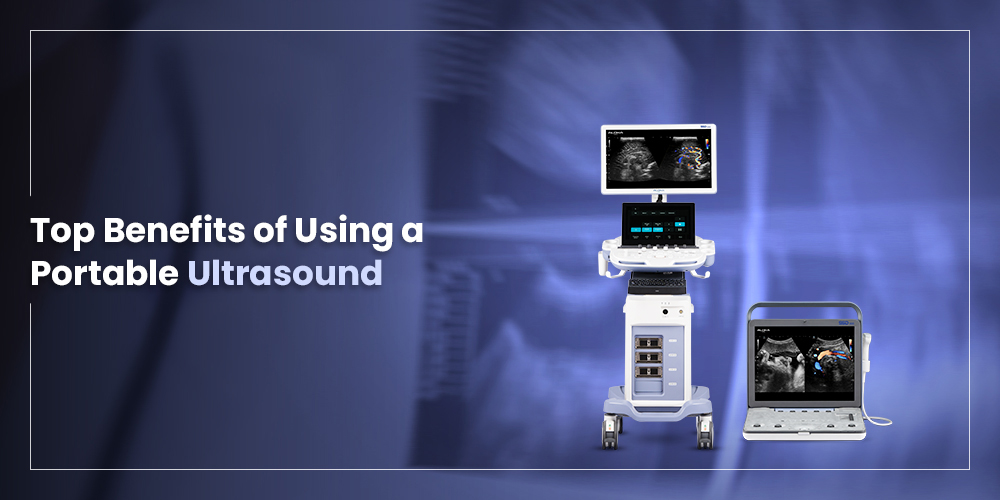
Healthcare today is moving faster, becoming more responsive, and reaching places it never could before. At the centre of this transformation is the portable ultrasound machine, a technology that is redefining how and where diagnostics happen.
From emergency rooms and ICUs to rural clinics and ambulances, portable imaging solutions are enabling clinicians to make quicker, more informed decisions. As the demand for accessible and efficient healthcare grows, understanding the benefits of portable ultrasound machine systems becomes essential for hospitals, clinics, and healthcare providers.
What is a Portable Ultrasound?
A portable ultrasound scanner is a compact imaging device designed to perform diagnostic ultrasound examinations without the limitations of traditional, fixed systems. Unlike conventional machines, these devices are lightweight, mobile, and often battery-powered.
In recent years, advancements have led to the development of the handheld ultrasound device, which can be easily carried and used at the patient’s bedside. These innovations are also widely known as point-of-care ultrasound machine systems, as they bring diagnostics directly to the point of treatment.
1. Faster Diagnosis at the Point of Care
One of the most significant advantages of a portable ultrasound machine is its ability to provide real-time imaging at the patient’s location.
Instead of transporting patients to imaging departments, clinicians can perform scans instantly at the bedside. This is especially valuable in:
- Emergencies
- Critical care units
- Trauma cases
Faster diagnosis leads to quicker treatment decisions, which can significantly improve patient outcomes.
2. Improved Accessibility in Remote Areas
Access to diagnostic imaging is still a challenge in many parts of the world. A portable ultrasound scanner helps bridge this gap by bringing advanced imaging capabilities to:
- Rural healthcare centres
- Mobile clinics
- Community outreach programmes
By enabling early detection and monitoring, these devices play a crucial role in improving healthcare accessibility and equity.
3. Enhanced Workflow Efficiency
Traditional imaging workflows often involve scheduling delays, patient transfers, and resource constraints. A point-of-care ultrasound machine simplifies this process.
Clinicians can:
- Perform immediate scans
- Reduce patient movement
- Minimise waiting times
This leads to more efficient workflows, better utilisation of resources, and improved patient throughput.
4. Cost-Effective Imaging Solution
Investing in a portable ultrasound machine can be more cost-effective compared to large, stationary systems.
Key cost advantages include:
- Lower initial investment
- Reduced infrastructure requirements
- Minimal maintenance costs
Additionally, by enabling early diagnosis, healthcare providers can reduce long-term treatment expenses and hospital stays.
5. Versatility Across Specialties
A portable ultrasound scanner is not limited to one application. It can be used across multiple specialties, including:
- Obstetrics and Gynaecology
- Cardiology
- Emergency medicine
- Musculoskeletal imaging
- Abdominal assessments
This versatility makes it a valuable tool for both specialised and general healthcare settings.
6. Ideal for Critical and Emergency Care
In high-pressure environments, time is critical. A handheld ultrasound device allows clinicians to assess internal conditions quickly without delays.
It is particularly useful for:
- FAST (Focused Assessment with Sonography for Trauma) scans
- Cardiac evaluations
- Fluid detection
Having immediate access to imaging in emergency scenarios can be life-saving.
7. Compact, Lightweight, and User-Friendly
Modern portable ultrasound machines are designed with usability in mind. Their compact size and intuitive interfaces make them easy to operate, even in fast-paced environments.
Benefits include:
- Easy transport between departments
- Minimal training requirements
- Quick setup and operation
This ensures that healthcare professionals can focus more on patient care and less on complex equipment handling.
8. Supports Preventive and Continuous Care
Portable imaging is not just about diagnosis; it also supports ongoing monitoring and preventive care.
With a point-of-care ultrasound machine, clinicians can:
- Track disease progression
- Monitor treatment effectiveness
- Conduct regular screenings
This proactive approach helps improve long-term patient outcomes and reduces complications.
9. Enables Better Patient Experience
Patients benefit significantly from the convenience of bedside imaging. A portable ultrasound scanner reduces the need for:
- Multiple appointments
- Patient transfers
- Long waiting times
This leads to a more comfortable and seamless healthcare experience, especially for elderly or critically ill patients.
10. Driving the Future of Healthcare
The rise of the handheld ultrasound device and portable imaging systems reflects a broader shift toward decentralised healthcare. Diagnostics are no longer confined to specific rooms; they are becoming integrated into everyday clinical practice.
With continuous advancements in imaging quality, automation, and connectivity, portable ultrasound solutions are set to play an even bigger role in the future of healthcare.
Conclusion
The portable ultrasound machine is more than just a compact device; it is a powerful tool that is transforming healthcare delivery. From improving accessibility and efficiency to enabling faster, more accurate diagnoses, its benefits are far-reaching.
For healthcare providers looking to enhance patient care while optimising resources, investing in a portable ultrasound scanner or point-of-care ultrasound machine is a step toward smarter, more responsive healthcare.
As technology continues to evolve, portable imaging solutions will remain at the forefront of innovation, bringing quality care closer to where it is needed most.
Frequently Asked Questions (FAQs)
1. How do I choose the right portable ultrasound for my facility?
Start by identifying your primary use cases, such as emergency care, obstetrics, or general diagnostics. Look for a system that offers the right balance of image quality, ease of use, portability, and reliable service support.
2. Are portable ultrasound systems reliable for everyday clinical use?
Yes, modern systems are designed to deliver consistent performance for routine and point-of-care applications. They are widely used across departments for quick assessments and ongoing monitoring.
3. What kind of upkeep does a portable ultrasound device require?
Maintenance is relatively simple. Regular cleaning, safe handling, and occasional servicing help ensure long-term performance and reliability.
4. Can these systems connect with hospital software or reporting tools?
Most current devices support connectivity features that allow images and reports to be stored, shared, and accessed easily within existing hospital workflows.
5. Is it easy for clinicians to get comfortable using these devices?
Yes, most systems are built with intuitive interfaces. With basic training, clinicians can quickly become confident in operating them during routine practice.
6. What should be considered before making a purchase decision?
It’s important to evaluate clinical needs, workflow requirements, budget, and long-term support. Choosing a trusted provider with strong service backing can make a significant difference.