

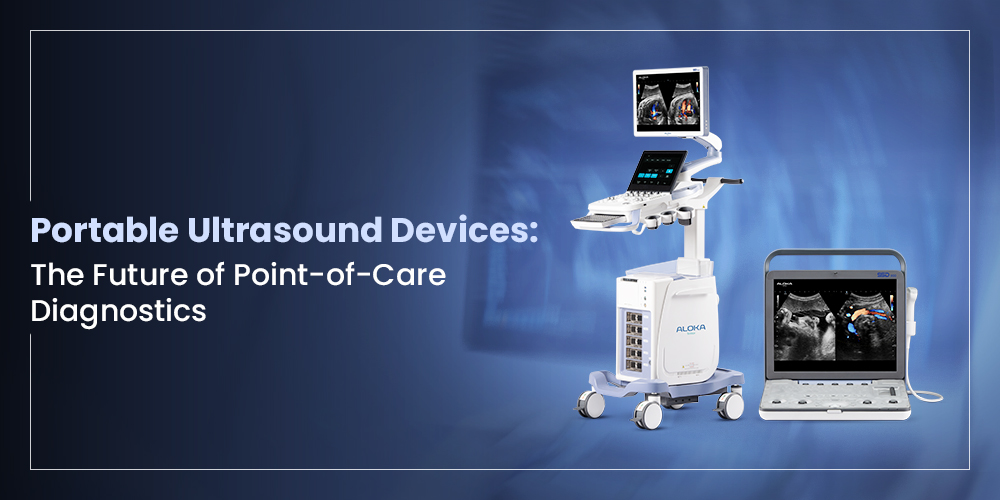
Portable Ultrasound Devices: The Future of Point-of-Care Diagnostics
17 Jul 2026
Healthcare is rapidly evolving, and so are the technologies that support faster, more accurate diagnosis. Among the most significant advancements is the rise of portable ultrasound devices, which are transforming the way clinicians deliver patient care. Once confined to imaging departments, ultrasound systems are now compact, mobile, and powerful enough to bring diagnostics directly to the patient's bedside.
From emergency rooms and intensive care units to ambulances and rural healthcare centres, portable diagnostic imaging is enabling healthcare professionals to make timely clinical decisions wherever care is needed. As hospitals continue to embrace point-of-care diagnostics, investing in a portable ultrasound machine is becoming an essential step towards delivering faster, safer, and more efficient healthcare.
What Are Portable Ultrasound Devices?
Portable ultrasound devices are compact imaging systems designed to perform diagnostic examinations at the point of care. Unlike traditional ultrasound systems that require dedicated imaging suites, these portable solutions allow clinicians to perform scans directly where patients are being treated.
Whether it is a cart-based portable ultrasound machine or a compact handheld ultrasound device, these systems offer flexibility while maintaining high-quality imaging performance across a wide range of clinical applications.
Today, portable ultrasound is widely used in:
- Emergency Medicine
- Critical Care
- Cardiology
- Internal Medicine
- Obstetrics & Gynaecology
- Nephrology
- Anaesthesiology
- Musculoskeletal Imaging
- Paediatrics
Why Portable Diagnostic Imaging Is Becoming Essential
Modern healthcare demands quicker diagnoses, shorter patient waiting times, and greater accessibility. This is where portable diagnostic imaging is making a significant difference.
Instead of transporting patients to radiology departments, clinicians can now bring imaging directly to the bedside. This not only saves valuable time but also improves patient safety, especially for critically ill patients who cannot be moved easily.
As hospitals increasingly adopt point-of-care models, portable imaging has become an important part of delivering timely and efficient healthcare.
Benefits of Portable Ultrasound Devices
The benefits of portable ultrasound devices extend beyond convenience. They improve clinical workflows while supporting better patient outcomes.
Faster Clinical Decision-Making
One of the greatest advantages of a portable ultrasound machine is immediate access to real-time diagnostic information.
Clinicians can visualise organs, blood vessels, soft tissues, and fluid collections during patient assessment, enabling faster diagnosis and earlier treatment decisions.
Improved Patient Care
Portable ultrasound eliminates unnecessary patient transfers, making examinations safer and more comfortable.
Bedside imaging is particularly valuable for critically ill patients, elderly individuals, and trauma cases where movement may increase clinical risk.
Greater Accessibility
Healthcare providers can now extend imaging services beyond hospital radiology departments.
Portable systems are increasingly used in:
- Community hospitals
- Rural healthcare centres
- Mobile clinics
- Emergency response units
- Ambulances
- Disaster relief programmes
This improved accessibility helps deliver quality healthcare to underserved populations.
Enhanced Workflow Efficiency
Portable ultrasound significantly reduces delays associated with scheduling imaging appointments or transporting patients.
This allows clinicians to assess patients faster, optimise departmental workflows, and improve overall healthcare efficiency.
Portable Ultrasound for Emergency Care
One of the fastest-growing applications is portable ultrasound for emergency care.
Emergency physicians rely on portable ultrasound to rapidly evaluate patients with trauma, internal bleeding, cardiac emergencies, abdominal pain, and respiratory distress.
Bedside ultrasound enables immediate assessment during critical situations, allowing clinicians to make informed decisions without waiting for conventional imaging.
For emergency departments, this means:
- Faster diagnosis
- Earlier intervention
- Improved patient management
- Reduced treatment delays
Supporting Multiple Clinical Specialties
Portable ultrasound systems have become valuable across numerous medical disciplines.
Critical Care
In intensive care units, portable ultrasound supports cardiac assessment, vascular access, pleural evaluations, and fluid management without moving critically ill patients.
Nephrology
Portable imaging assists nephrologists in evaluating kidneys, dialysis access, and ultrasound-guided procedures with greater convenience.
Obstetrics and Gynaecology
Portable ultrasound improves access to maternal healthcare by supporting routine pregnancy examinations both within hospitals and community outreach programmes.
Anaesthesiology
Ultrasound-guided regional anaesthesia has become increasingly common due to its ability to improve needle placement accuracy and patient safety.
Musculoskeletal Imaging
Portable systems allow clinicians to assess joints, tendons, ligaments, and soft tissue injuries quickly in outpatient clinics and sports medicine settings.
Choosing the Best Portable Ultrasound Machine for Hospitals
Selecting the best portable ultrasound machine for hospitals depends on several important factors.
Healthcare providers should evaluate:
- Image quality
- Portability and mobility
- Battery performance
- Clinical applications
- Probe compatibility
- User-friendly interface
- Connectivity and data sharing
- Service and technical support
Hospitals should invest in systems that provide advanced imaging capabilities while supporting long-term operational efficiency and future scalability.
The Rise of Handheld Ultrasound Devices
Alongside cart-based systems, the handheld ultrasound device is becoming increasingly popular.
These compact solutions fit into a clinician's pocket while providing real-time imaging directly through smartphones or tablets.
Handheld devices are particularly valuable for:
- Rapid bedside assessments
- Primary care
- Remote healthcare
- Medical education
- Home healthcare visits
- Ambulance services
Although compact, many handheld systems offer advanced imaging capabilities that continue to improve with ongoing technological innovation.
The Future of Portable Ultrasound
Artificial intelligence, cloud connectivity, and workflow automation are shaping the future of portable ultrasound devices.
Modern systems increasingly include features such as:
- AI-assisted image optimisation
- Automated measurements
- Clinical decision support
- Cloud-based image sharing
- Remote consultation capabilities
- Smart workflow integration
These advancements are making portable ultrasound more powerful while simplifying its use for healthcare professionals.
Conclusion
The future of healthcare lies in delivering faster, more accessible, and patient-centred diagnostics. Portable ultrasound devices are helping make this possible by bringing advanced imaging directly to the point of care. Whether through a high-performance portable ultrasound machine or an innovative handheld ultrasound device, healthcare providers can improve diagnostic confidence, streamline workflows, and enhance patient outcomes.
As demand for portable diagnostic imaging continues to grow, hospitals and healthcare facilities are recognising the value of investing in these advanced technologies. From routine examinations to portable ultrasound for emergency care, these systems are reshaping the future of medical imaging.
At Trivitron Healthcare, we are committed to advancing point-of-care diagnostics through innovative ultrasound solutions that combine exceptional image quality, mobility, and clinical confidence.