


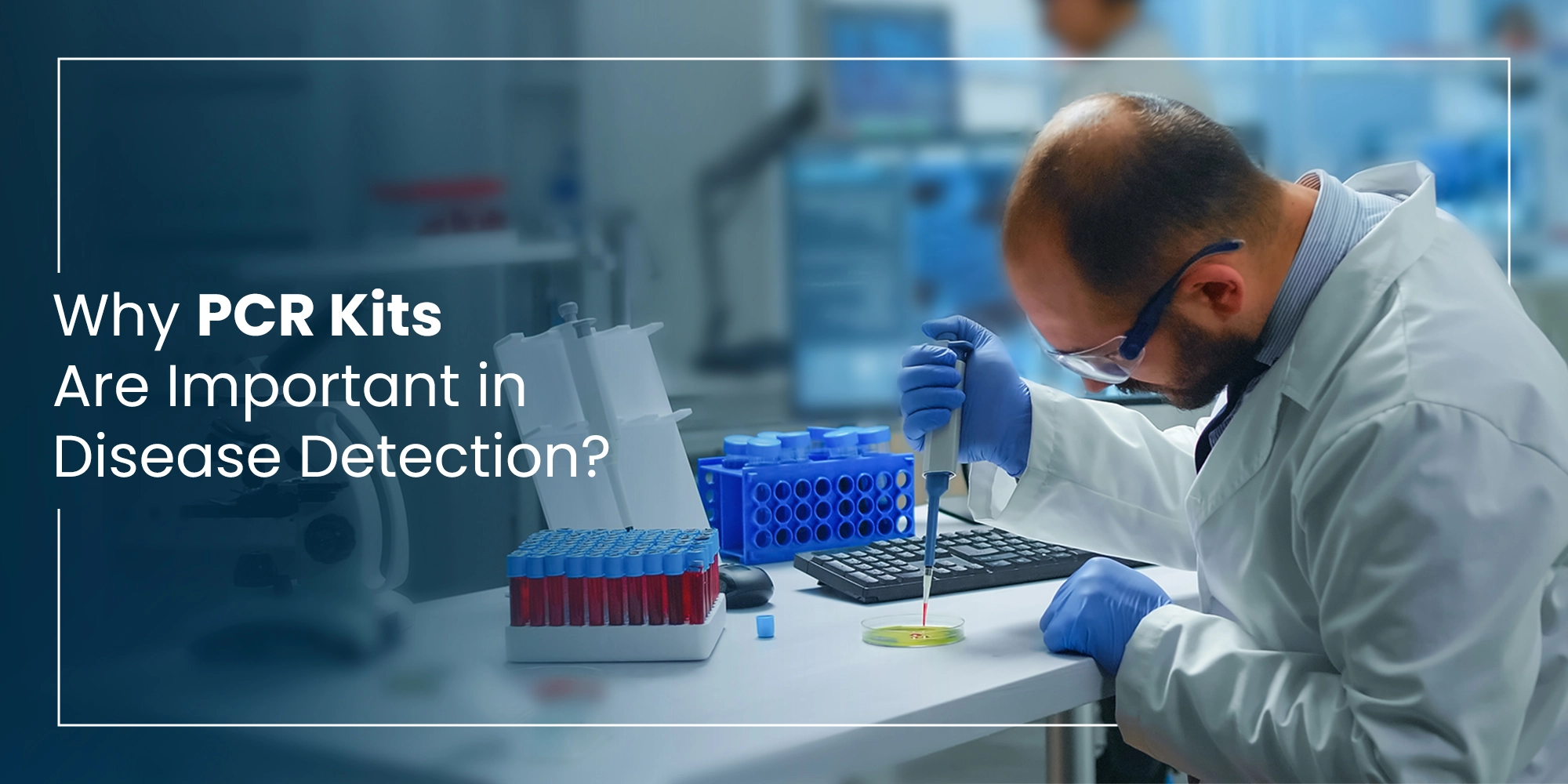
In modern healthcare, timely and accurate disease detection is critical for effective treatment and improved patient survival. PCR (Polymerase Chain Reaction) kits have emerged as a powerful ally in modern medical diagnosticsby enabling the precise identification of infectious agents and genetic abnormalities at the molecular level.The PCR technology revolutionized laboratory diagnostics by allowing rapid amplification and detection of specific DNA or RNA sequences, even when present in extremely low quantities. This high sensitivity and specificity enable early diagnosis, guide appropriate therapeutic decisions, and reduce the risk of disease transmission. Consequently, PCR kits play a vital role in strengthening clinical decision-making, improving patient outcomes, and supporting public health surveillance.
What is PCR?
PCR is a molecular diagnostic technique used to detect the presence of pathogen-specific or abnormal genetic material (DNA or RNA) in a clinical sample. Even when only trace amounts of genetic material are present, PCR can selectively amplify the target sequence millions of times, making it easily detectable within a few hours. This high level of sensitivity and precision gives PCR a significant advantage over many traditional diagnostic methods, enabling rapid and reliable identification of diseases, particularly during early stages of infection.
Why PCR Kits Matter in Disease Detection
1. Exceptional Accuracy and Sensitivity
PCR kits enable the detection of diseases at very early stages, often even before clinical symptoms become apparent. This is particularly evident in viral infections such as COVID-19, hepatitis, and HIV, as well as in bacterial and parasitic diseases. By amplifying specific genetic targets with high precision, PCR minimizes false-negative results and delivers highly reliable outcomes. Such accuracy empowers clinicians to make confident diagnostic decisions and initiate timely, appropriate interventions.
2. Early Diagnosis Saves Lives
Early detection is critical for effective disease management and prevention of serious complications. PCR kits enable the identification of infections at very early stages, often before symptoms develop, allowing timely isolation or quarantine measures and the initiation of appropriate treatment. From a public health perspective, this rapid and accurate diagnosis is essential for controlling disease transmission and managing outbreaks effectively.
3. Rapid Turnaround Time
Unlike traditional culture-based diagnostic methods that may require days or even weeks to produce results, PCR testing can deliver accurate outcomes within a few hours. This rapid turnaround proved crucial during the COVID-19 pandemic, where timely diagnosis was essential for patient management, isolation, and controlling virus transmission. Such speed is especially critical in emergency settings, intensive care units, and outbreak situations, where even a few hours can make a significant difference in clinical and public health responses.
4. Wide Range of Applications
PCR kits extend far beyond the detection of infectious diseases and are widely used across multiple areas of healthcare and biomedical research. Their applications include genetic disorder testing, detection of cancer-related mutations in oncology, prenatal and neonatal screening, blood safety testing, and identification of drug-resistance markers. This broad versatility establishes PCR as a foundational technology in both clinical diagnostics and research laboratories.
5. High Specificity Reduces Diagnostic Errors
PCR kits are designed to amplify only the intended target genetic sequence through the use of disease-specific primers and probes. This high level of specificity enables accurate differentiation between closely related pathogens, significantly reducing the risk of misdiagnosis. As a result, PCR-based testing helps prevent inappropriate treatments and supports precise, evidence-based clinical decision-making.
6. Impact of PCR Kits on Public Health
During global and regional health emergencies, PCR kits play a critical role in disease detection and control. In outbreaks such as COVID-19, Nipah virus infection, and MonkeyPox, PCR-based testing enabled large-scale screening, surveillance, and epidemiological monitoring with high accuracy. Reliable PCR diagnostics allowed governments and healthcare systems to track disease spread in real time, analyze infection trends, and implement timely, data-driven public health interventions such as isolation, contact tracing, and containment measures.
7. Backed-up Personalized and Precision Medicine
Modern healthcare increasingly emphasizes personalized treatment strategies, and PCR plays a key role in this transformation. By enabling the detection of genetic mutations, measurement of viral load, and identification of drug-resistance markers, PCR kits provide critical molecular insights. These capabilities support the selection of the most effective, patient-specific therapies, thereby improving treatment outcomes and advancing precision medicine.
Quality PCR Kits Make a Significant Difference
Not all PCR kits are created equal, and high-quality kits offer clear advantages. The best kits ensure:
- Consistent and uniform performance
- Reproducible and reliable results
- Minimal risk of contamination
- Compatibility with automated PCR platforms
Selecting reliable PCR kits directly enhances laboratory efficiency, strengthens confidence in diagnostic results, and contributes to higher standards of patient care and overall healthcare quality.