

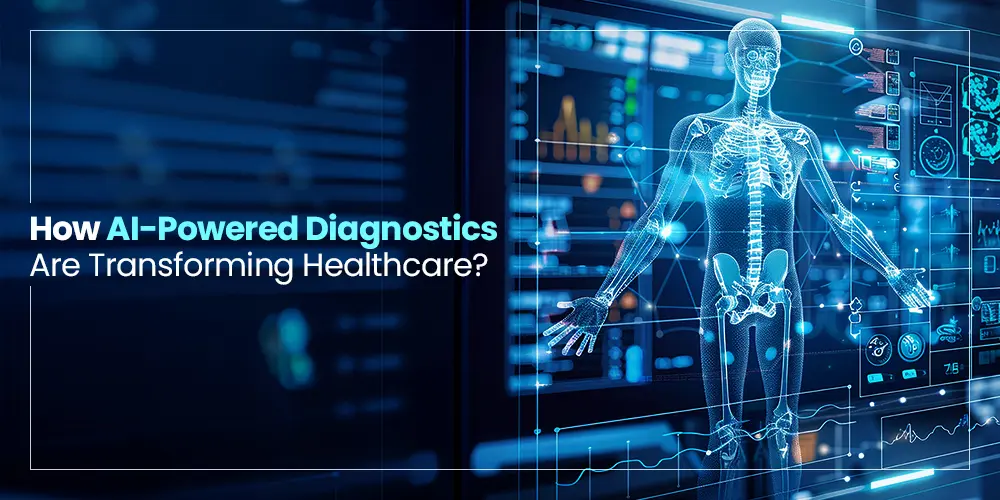
AI-powered diagnostics are reshaping how clinicians detect, monitor, and manage disease, making care faster, more accurate, and more personalised than ever before. For innovators, this shift is not just about adopting new tools, but about reimagining the entire diagnostic journey around intelligent, data-driven decisions.
What Are AI-Powered Diagnostics?
AI-powered diagnostics use algorithms, often based on machine learning and deep learning, to analyse clinical data such as images, lab values, waveforms, and electronic health records to support or automate medical decision-making. This is the core of AI in healthcare, where systems learn patterns from large datasets and then apply that “experience” to new patients in real time.
Unlike traditional rule-based software, artificial intelligence in medical diagnostics can continuously improve as it is exposed to more diverse, high-quality data from imaging, pathology, genomics, and wearables. This enables richer insights than manual review alone, especially in complex diseases with subtle or overlapping features.
How AI Improves Accuracy and Speed
One of the most visible impacts of AI-powered diagnostics is in medical imaging, where algorithms can flag tiny lung nodules, early breast lesions, or retinal changes long before they are obvious to the human eye. In many studies, AI tools have matched or exceeded specialist-level performance in tasks such as detecting diabetic retinopathy, pneumonia, and certain cancers on scans.
Beyond images, AI-based disease detection models combine lab data, vital signs, and clinical notes to predict sepsis, heart failure exacerbations, or arrhythmias hours before standard monitoring would. This speed matters because earlier diagnosis often translates into earlier treatment, fewer complications, and shorter hospital stays.
Personalising Care with AI Insights
AI in healthcare is also a powerful engine for precision medicine, moving diagnostics from “one-size-fits-all” to highly individualised risk profiles and care pathways. By integrating imaging, genomics, and longitudinal health records, artificial intelligence in medical diagnostics can help classify patients into subgroups that respond differently to specific drugs or interventions.
In oncology, for example, AI systems are being used to interpret tumour genomics, predict response to immunotherapies, and anticipate resistance patterns, allowing oncologists to tailor regimens more confidently. Similar approaches in cardiology, neurology, and psychiatry are helping clinicians choose therapies that balance efficacy with side-effect risk for each unique patient.
Transforming Workflows and Access
From a systems perspective, AI-powered diagnostics do more than “read” images or lab results; they reshape workflows across the care continuum. Triage algorithms can prioritise the most urgent scans in a radiology worklist, while decision-support tools highlight abnormal results and suggest next steps, reducing burnout and cognitive overload.
In parallel, point-of-care and remote solutions, such as handheld ultrasound with embedded AI, smart stethoscopes, or wearables with continuous monitoring, extend diagnostic capabilities beyond tertiary hospitals. Aligning core diagnostic platforms with AI-based disease detection can help bring specialist-level insights to rural clinics and resource-limited settings, narrowing long-standing gaps in access.
Risks, Ethics, and Responsible Adoption
Even as AI-powered diagnostics accelerate, responsible adoption remains critical. Algorithms can encode bias if they are trained on non-representative datasets, leading to poorer performance in underserved populations and potentially widening inequities in care.
There are also concerns around transparency, data privacy, and accountability when AI contributes to clinical decisions. Healthcare organisations need robust governance: clear validation standards, continuous performance monitoring, cybersecurity safeguards, and training so clinicians understand both the capabilities and the limits of AI tools.
In Summary
The next decade will see AI in healthcare move from pilots to everyday infrastructure, quietly embedded in imaging suites, labs, ICUs, and even home monitoring devices. The opportunity lies in seamlessly integrating artificial intelligence in medical diagnostics into its existing portfolio, so that analysers, imaging systems, and point-of-care devices all become smarter, more connected, and more predictive over time.
By focusing on clinically validated algorithms, interoperable platforms, and strong ethical safeguards, innovators can ensure that AI-powered diagnostics enhance, rather than replace, the expertise and empathy of clinicians. Ultimately, AI-based disease detection should feel to patients like what it truly is: a quiet, intelligent ally making each diagnosis faster, safer, and more precise.
Frequently Asked Questions
1. How is AI used in medical diagnostics today?
AI-powered diagnostics are used to interpret medical images, flag critical lab abnormalities, predict clinical deterioration, and support triage in emergency and inpatient settings. Many radiology, cardiology, and ophthalmology departments already use cleared AI tools as a “second reader” to reduce missed findings and speed reports.
2. What are the main benefits of AI-powered diagnostics for patients?
Patients benefit from earlier detection of disease, fewer diagnostic errors, and more personalised treatment plans guided by integrated data analysis. These advantages often translate into shorter hospital stays, better outcomes, and smoother care journeys across specialties.
3. How do clinicians stay in control when using AI in healthcare?
Regulators and professional bodies emphasise that AI systems should support, not replace, clinician judgment, keeping humans firmly “in the loop.” In practice, clinicians can accept, question, or override AI suggestions, combining algorithmic insights with clinical context and patient preferences.
4. What challenges limit the wider adoption of artificial intelligence in medical diagnostics?
Key barriers include data privacy concerns, integration with legacy IT systems, uncertain reimbursement, and the need for large, diverse datasets to avoid bias. There is also a skills gap, as many health systems must invest in training clinicians and IT teams to deploy and monitor AI safely.
5. How might AI-based disease detection evolve in the next few years?
Future AI-based disease detection will likely combine real-time data from wearables, home devices, hospital equipment, and genomic tests into unified risk scores. This could enable continuous, proactive monitoring, detecting disease before symptoms appear and turning diagnostics into an always-on, preventive layer of care.